Fingersmith's Garage โ€บ Piano Classes
๐ŸŽน Primary Instrument

Piano classes in Bangalore

Classical technique, sight reading and grade exams โ€” from your very first note to Grade 8 and beyond. 5 acoustic pianos, in Dodda Banaswadi.

G1โ€“G8
Full ABRSM, Trinity & LCM grade pathway available
5yrs+
Start from age 5 โ€” the younger, the faster they absorb
3ร—/yr
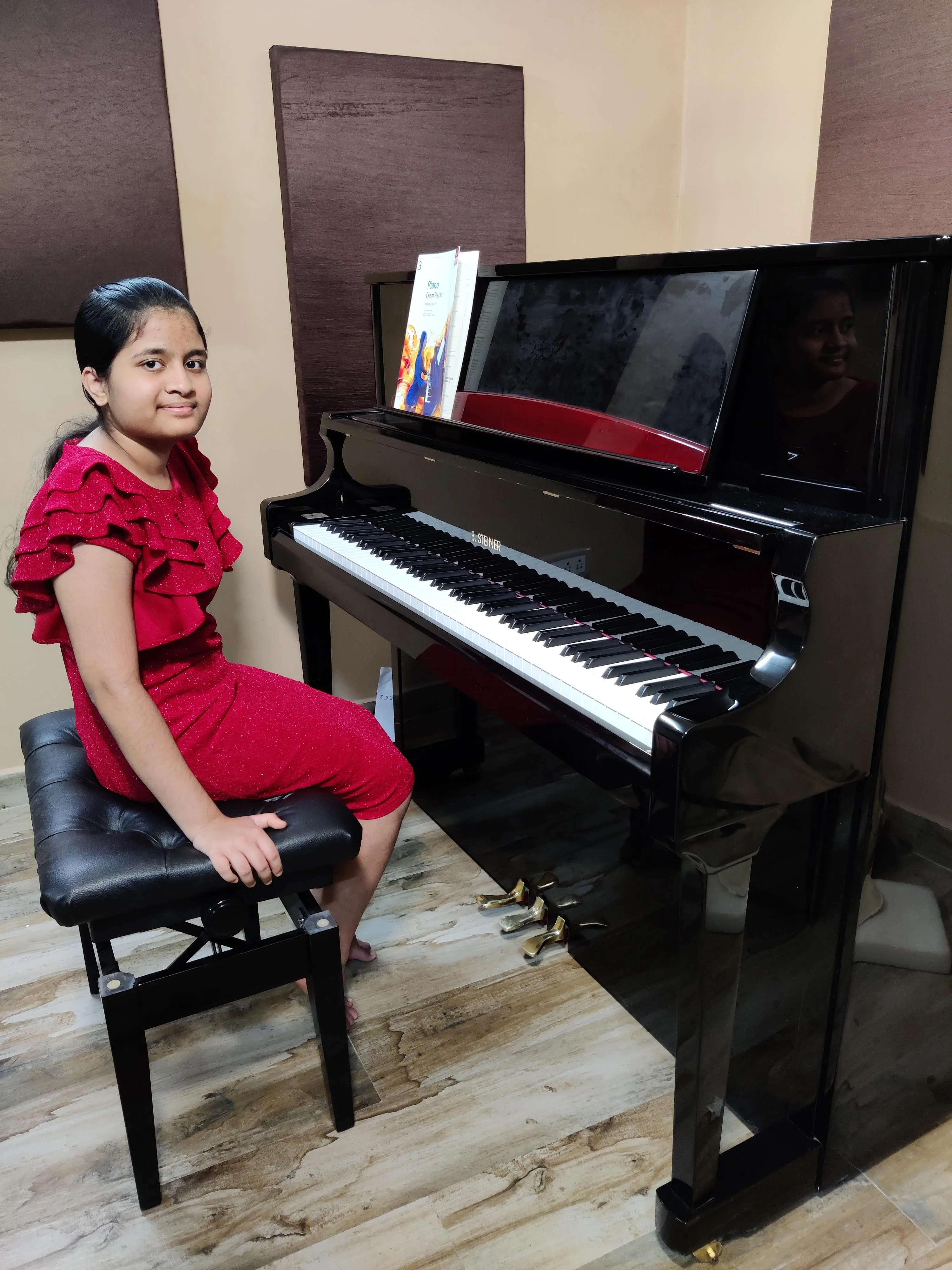
B. Steiner grand tuned by Furtados โ€” the same piano used for ABRSM exams
What the classes cover

From first notes to distinction

Piano classes at Fingersmith's Garage are built on a foundation of correct technique from day one โ€” finger position, posture, sight reading, and music theory alongside the pieces. We don't rush past the fundamentals.

๐ŸŽฏ
Finger technique first

Every class starts from correct hand position and finger independence. "First master the fundamentals โ€” nothing is complex after that." Students who skip this always struggle later.

๐Ÿ‘๏ธ
Sight reading from the start

Sight reading is woven into every class โ€” not treated as an exam-time addition. Students who practise it regularly are faster learners and better performers.

๐ŸŽผ
Theory alongside practical

Music theory reinforces what's learned at the piano. Combined online Zoom group sessions are available for theory and aural training.

๐ŸŽญ
Performance from early on

Students perform at recitals after each grade cycle โ€” building stage confidence early. Higher level students can participate in our choir and ensemble.

Grade pathway

Structured grade by grade

ABRSM โ€” Exam Centre Trinity LCM

We are an authorised ABRSM practical exam centre โ€” students sit ABRSM exams on-site. For Trinity and LCM, students prepare and record performances here for digital submission to those boards.

Initial
First structured pieces, basic notation and posture. ABRSM Initial grade โ€” a gentle, motivating start.
Grade 1โ€“2
Foundational technique, scales, arpeggios, simple sight reading. Aural tests introduced.
Grade 3โ€“4
More complex pieces, extended scales, theory grade preparation alongside. Ensemble pieces begin.
Grade 5โ€“6
Intermediate level โ€” theory Grade 5 is a prerequisite for ABRSM Grades 6 and above. Duets and advanced sight reading.
Grade 7โ€“8
Advanced musicianship. Stylistic awareness, complex repertoire, performance skills. Leads to diploma consideration.
The instruments you'll practise on

Real acoustic pianos โ€” not just keyboards

Touch, weight and tone are different on an acoustic piano compared to a digital keyboard. Students who learn on acoustic instruments are better prepared for exams and performances. We have 5 acoustic pianos at the school.

๐ŸŽน
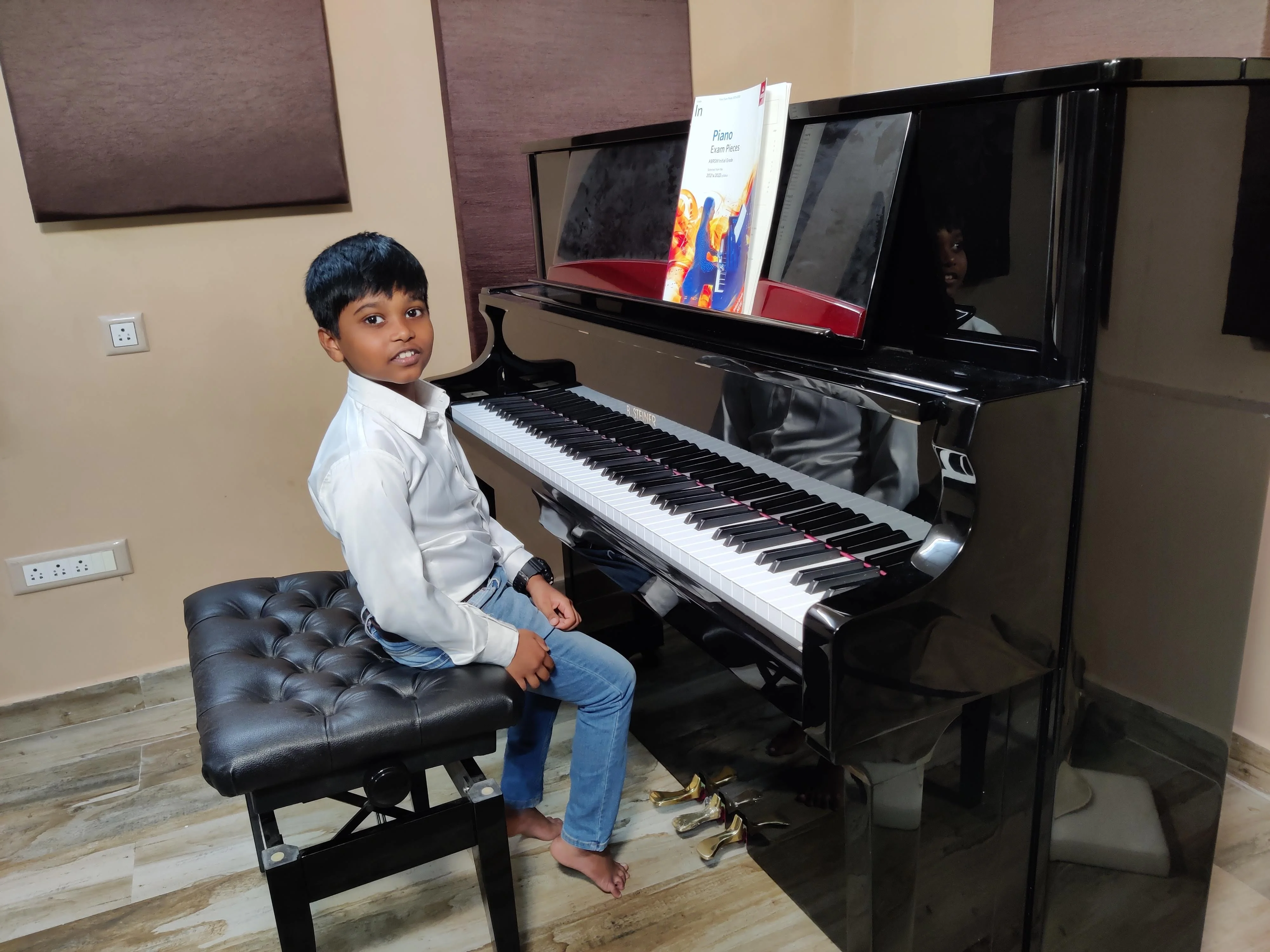
B. Steiner Upright Grand โ€” Exam Room
Our signature instrument. Tuned by Furtados three times a year. Used for ABRSM practical exams โ€” so students sit their exam on the same piano they've been practising on.
๐ŸŽน
4 Acoustic Upright Pianos โ€” Practice Rooms
All practice rooms have acoustic upright pianos. Students never practise on digital keyboards in class โ€” the feel is different and it matters for technique development.
๐Ÿ“š
400+ books in-house
Scales, arpeggios, sight reading, theory workbooks, solos, duets and ensemble pieces โ€” all available during class at no extra cost. No need to buy materials for regular classes.
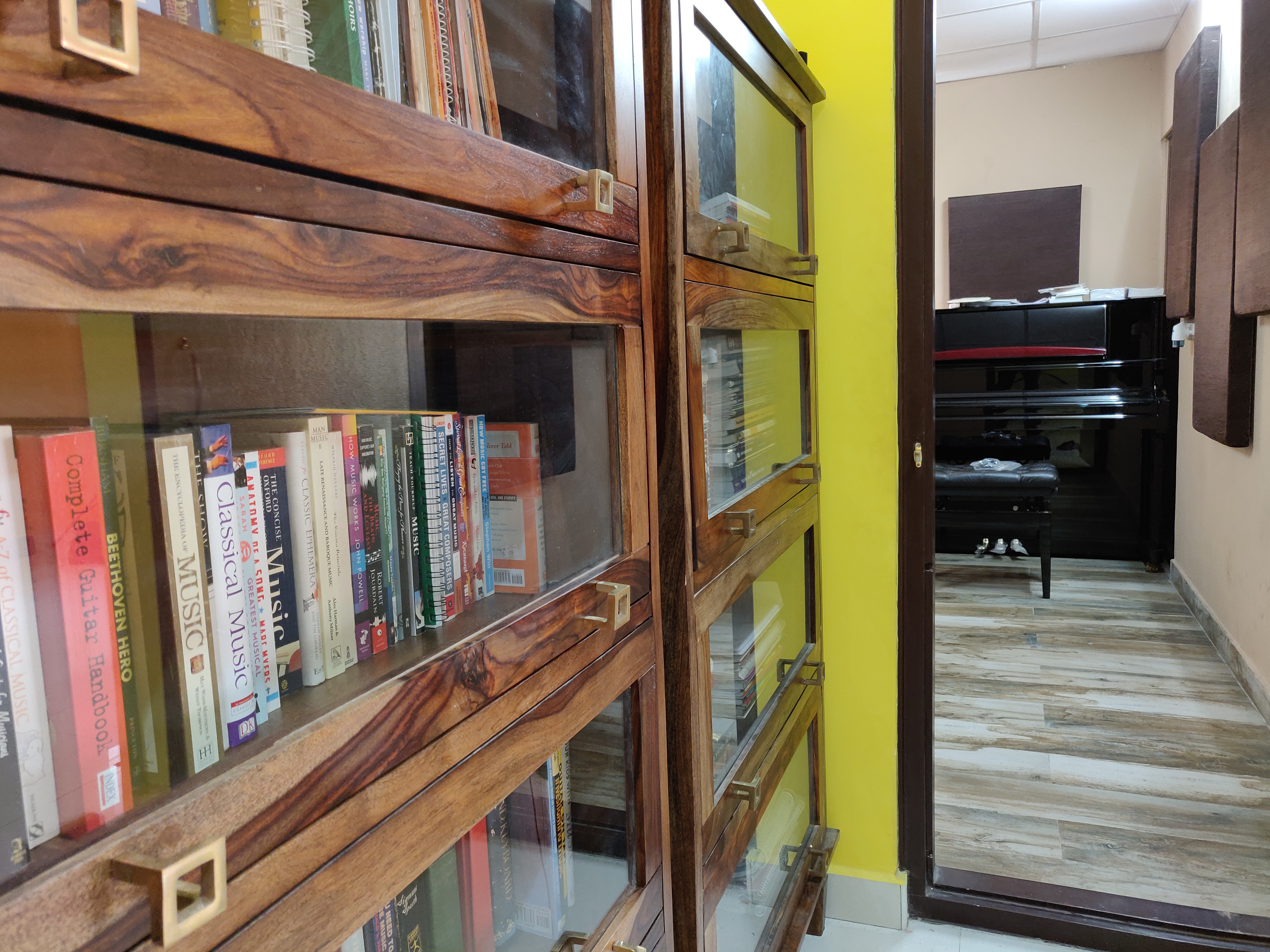
FSG music library โ€” glass-fronted book cabinet with classical music books, scales and theory workbooks, exam room piano in background
FSG music library โ€” 400+ titles available at class
Student at the piano during ABRSM grade exam at Fingersmith's Garage
ABRSM exam โ€” FSG exam room
Young piano student at ABRSM grade exam at Fingersmith's Garage
ABRSM exam โ€” FSG exam room
On stage

Piano students โ€” performing

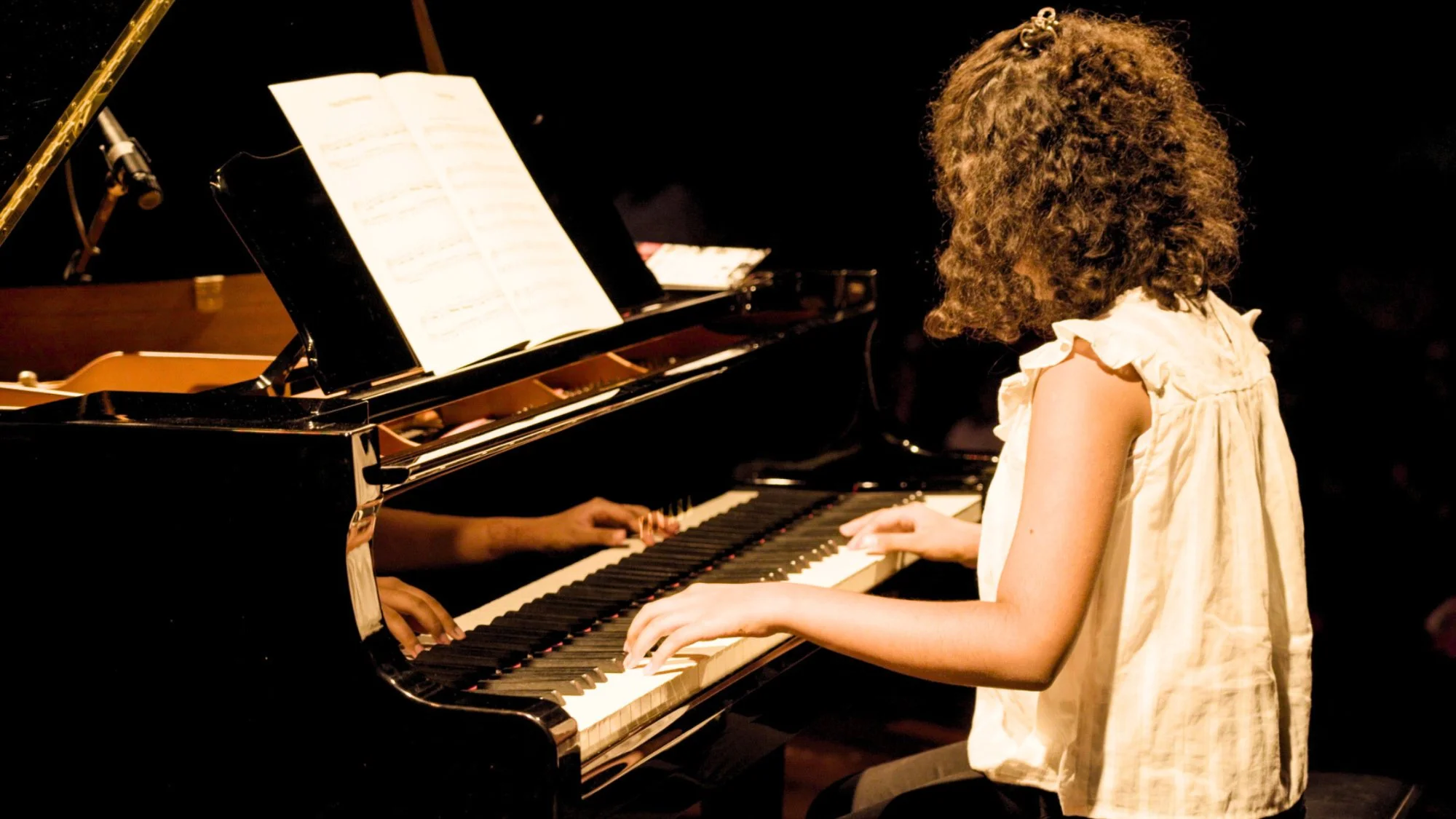
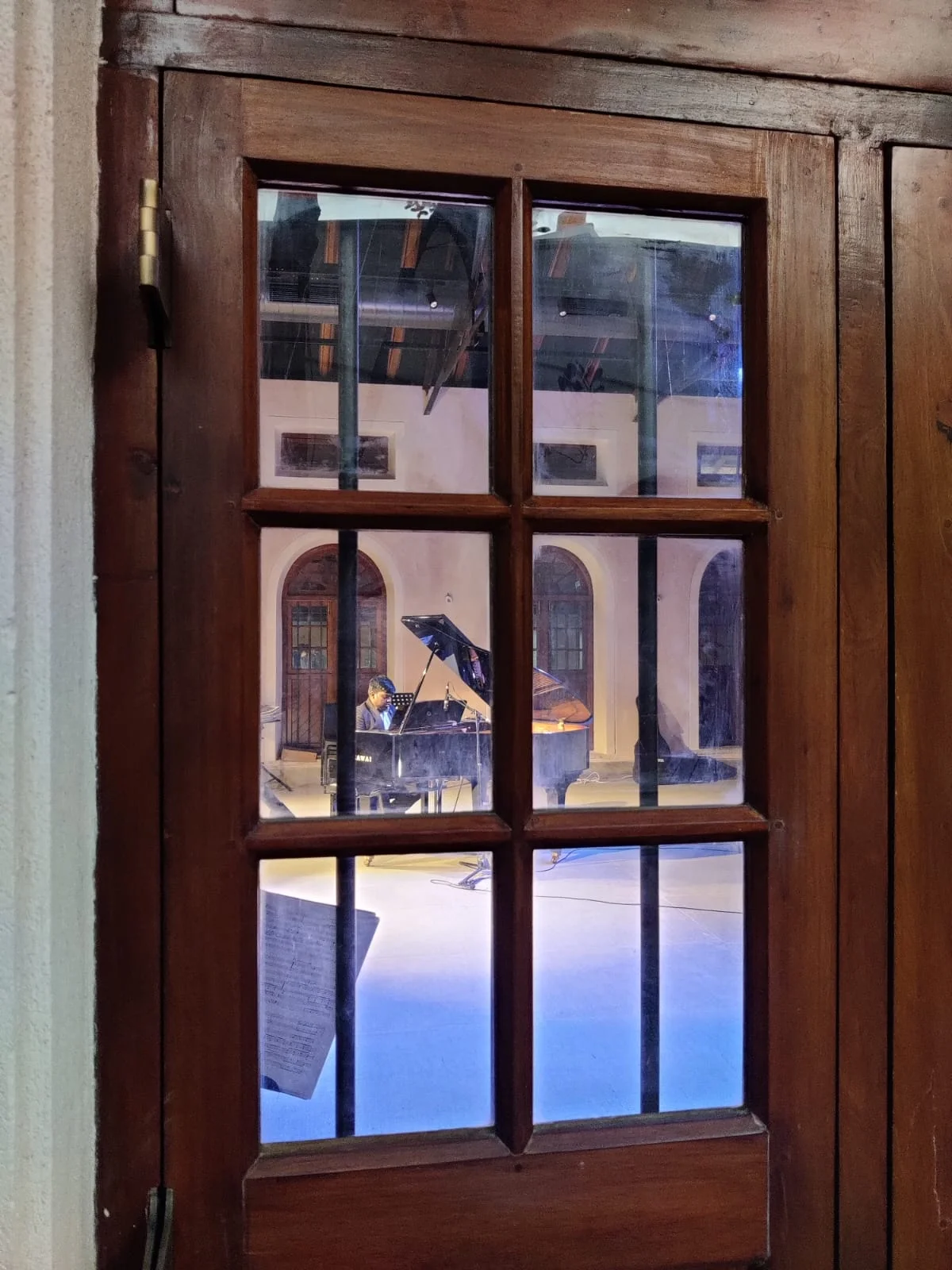
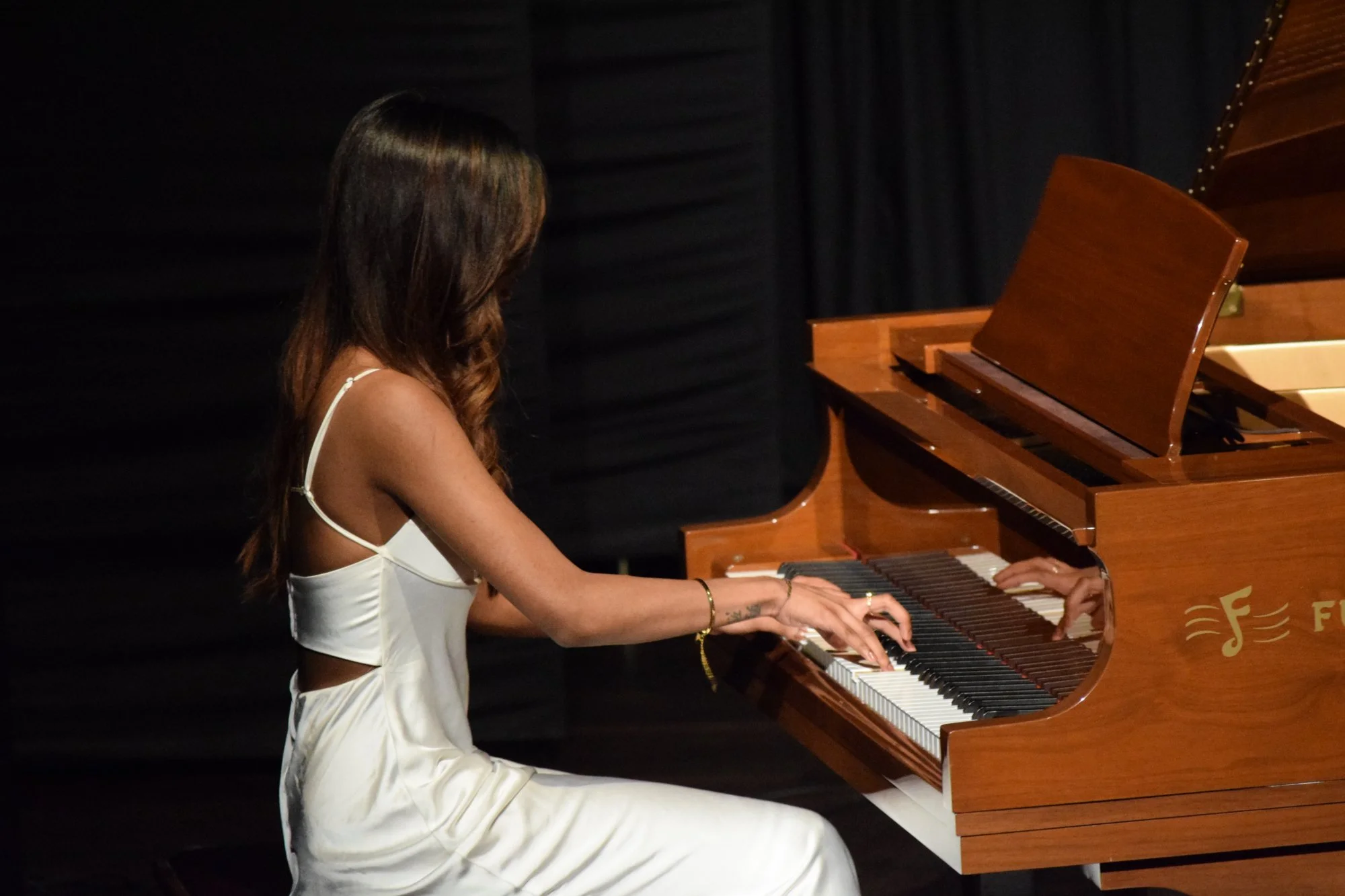
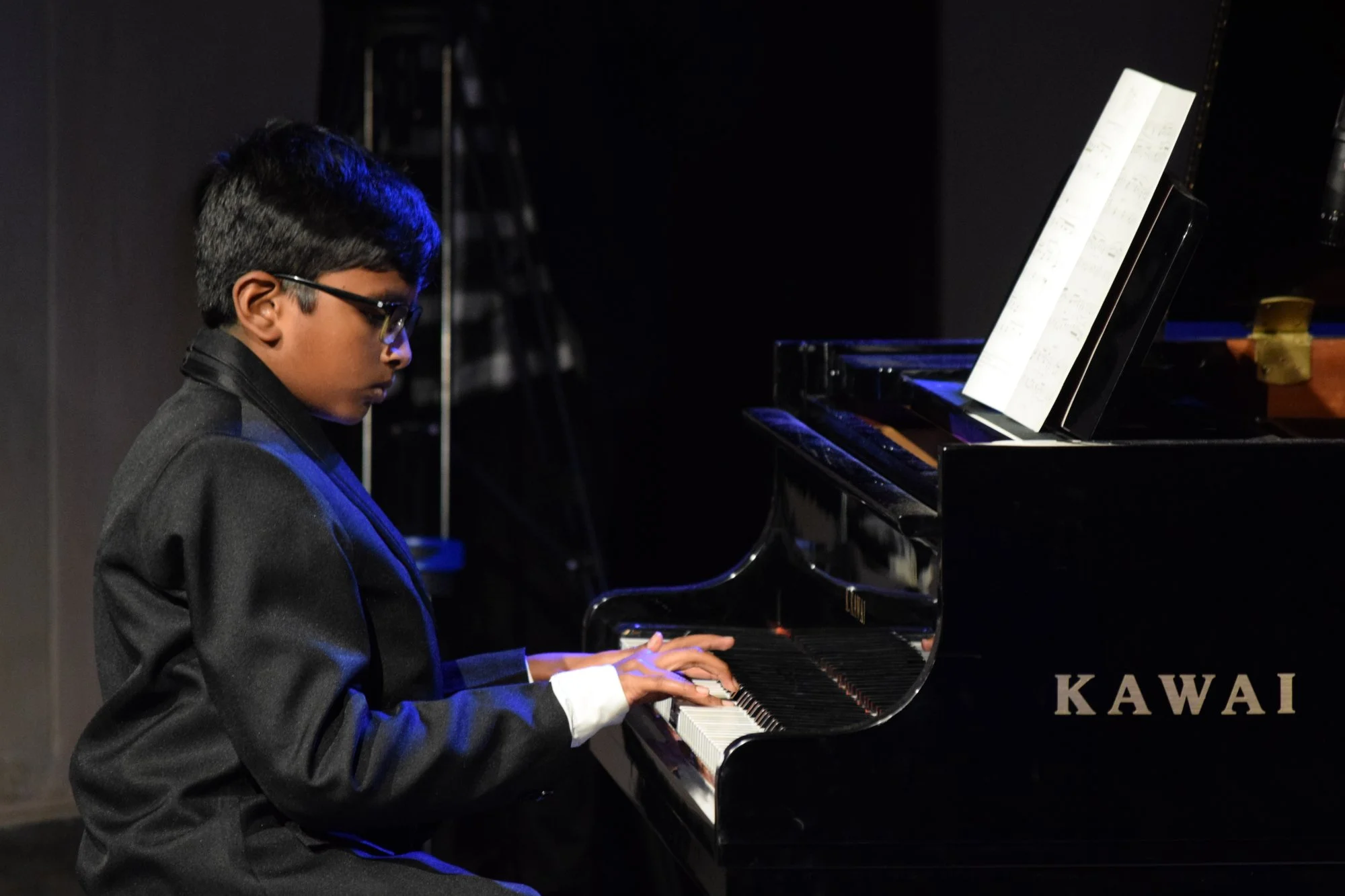
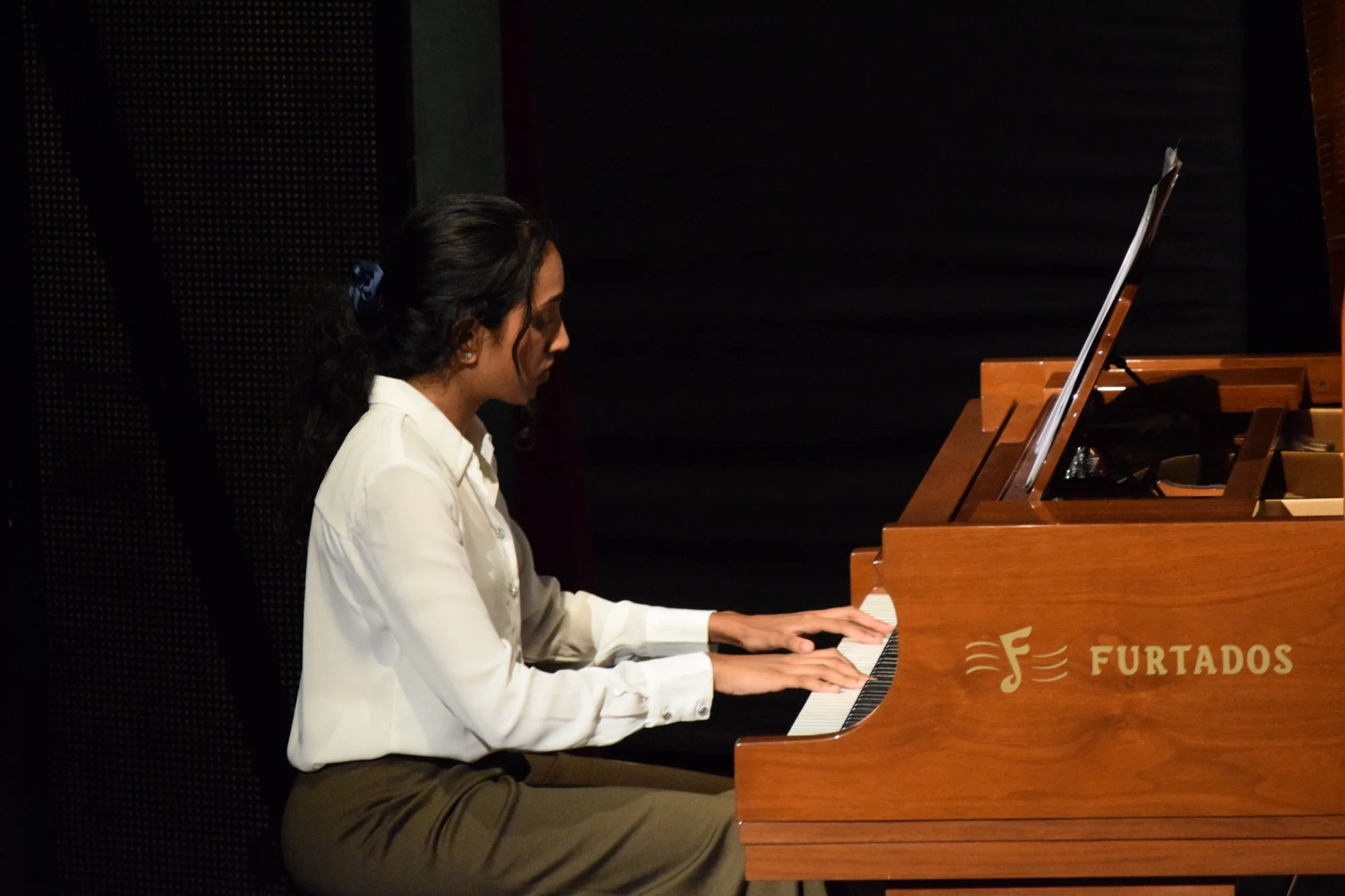
Every student performs at least once a year at a city venue. No school hall โ€” a real stage, a Kawai or Furtados grand piano, and a real audience.

Young girl piano student performing on Kawai grand piano โ€” warm golden stage light
FSG pianist performing at The Sabha Bangalore โ€” seen through the old wooden door
Female piano student performing on Furtados grand piano at annual recital
Young boy piano student performing on Kawai grand
Female piano student performing on Furtados grand piano at annual recital

Annual Recital ยท The Sabha ยท Furtados grand piano

Piano student Arya performing on stage at KMC, Bangalore

Piano student on stage โ€” KMC, Bangalore

Our own curriculum

A piano method written by the teacher himself

Most music schools use borrowed textbooks from external publishers. Our piano students learn from a curriculum written and published by Santosh Baynes โ€” the teacher who built Fingersmith's Garage.

Beginner's Introduction to Piano and Keyboard: Music Theory, Technique and Performance (101 pages, published 2020) covers sheet music reading, musical symbols, and technique โ€” exactly as taught in classes at FSG, for both in-person and virtual students.

๐Ÿ“– Why a purpose-built book matters

Generic piano books are written for generic students. This book is written specifically for how we teach here โ€” the same sequence of concepts, the same terminology, the same approach. Students and parents can use it to reinforce what's covered in class.

๐ŸŒ Available worldwide

Published independently and listed on Amazon India and internationally. ISBN: 979-8723706996. Ask us at class, or find it directly on Amazon.

View on Amazon India โ†’ Sign up for piano โ†’
๐Ÿ“–
Beginner's Introduction to Piano and Keyboard
Music Theory, Technique and Performance
By Santosh Baynes ยท 2020
101 pages ยท ISBN 979-8723706996
Available on Amazon India & worldwide
Piano FAQ

Questions about piano classes

Do I need a piano at home? +
Not right away. Early classes are paced so students don't need an instrument at home until they're genuinely committed to continuing. Once you're enrolled and progressing, having access to a piano or keyboard at home to practise between classes makes a real difference.
What age can my child start piano? +
From age 5 โ€” and in some cases from 4.5 years, speak to us. Piano is one of the best instruments for young children because it teaches note-reading and basic theory visually and intuitively. The earlier you start, the faster the foundations build.
Can adults learn piano from scratch? +
Absolutely. Adults often progress faster in the early stages because they understand musical concepts quickly. The learning journey is different โ€” slower finger development compared to children โ€” but the goal is still achievable. Many of our adult students have gone on to pass grade exams.
Are the piano exams held at the school? +
Yes โ€” for ABRSM. We are an authorised ABRSM practical exam centre. Students sit their ABRSM piano exams right here in our exam room, on the B. Steiner grand they've been practising on. For Trinity and LCM, students record their exam performances here and submit digitally to those boards.

Ready to start piano?

Sign up via the student app โ€” takes under 2 minutes. Our team will reach out to confirm your slot and fees.

Sign up now โ†’

Perform at the July 2026 Recital

July 25, 2026 ยท Samarthanam, Bangalore ยท Piano solos and ensemble pieces welcome โ€” open to all performers who have completed a grade exam in the last 12 months โ€” FSG students, independent learners, and students from other schools welcome.

Register to perform
Other instruments at Fingersmith's Garage
๐ŸŽธ Guitar ๐ŸŽป Violin ๐Ÿฅ Drumkit ๐ŸŽธ Bass Guitar ๐ŸŽป Viola ๐ŸŽน Organ ๐ŸŽต Xylophone ๐Ÿ›๏ธ ABRSM Exam Centre